
Category: Research & Innovation

UF researchers creating AI models to detect sinkhole trouble
April 8, 2026UF researchers are developing AI models that combine satellite imagery, soil data and weather patterns to detect early indicators of sinkholes and improve risk prediction across Florida.
Read more: UF researchers creating AI models to detect sinkhole trouble »
From athletes to everyday health: UF Engineers unveil bold vision for the future of human performance
March 24, 2026The UF Center for Engineering Human Performance and Wellness brings together experts from the Herbert Wertheim College of Engineering and the College of Health and Human Performance to study how wearable sensors, robotics and advanced data analysis can be used to monitor, understand and optimize how people move, recover and live.
Read more: From athletes to everyday health: UF Engineers unveil bold vision for the future of human performance »
Taking concrete steps towards sustainability
March 24, 2026In a $5 million project funded by the U.S. Department of Transportation, a team of researchers from UF, Rutgers University, Oregon State University and the New Jersey Institute of Technology are exploring the viability of using steel slag as an ingredient in cement and concrete. ESSIE associate professor Christopher Ferraro, Ph.D., is one of the project’s principal investigators.
Read more: Taking concrete steps towards sustainability »
Thermal cameras used in drones and robots can be tricked by heat sources, study finds
March 17, 2026As thermal cameras become commonplace on autonomous drones and vehicles, a University of Florida engineering professor is working to make sure they can’t be maliciously tricked into “seeing” things that aren’t there.
Read more: Thermal cameras used in drones and robots can be tricked by heat sources, study finds »
Machines spot deepfake pictures better than humans, but people outperform AI in detecting deepfake videos
February 26, 2026Artificial intelligence may be better than people at spotting fake faces in photos — but humans still have the upper hand when those fakes start moving.
Read more: Machines spot deepfake pictures better than humans, but people outperform AI in detecting deepfake videos »
Breaking AI on purpose: How researchers are helping make artificial intelligence safer
February 20, 2026University of Florida researcher Sumit Kumar Jha, Ph.D., is focused on strengthening the security measures built into AI tools to ensure they are safe for all to use.
Read more: Breaking AI on purpose: How researchers are helping make artificial intelligence safer »
Researchers unveil gigahertz resonances in nanoscale drumheads at room temperature
February 13, 2026From smartphones to quantum computers, modern technology depends on moving information quickly and efficiently. Now, scientists have found a way to control vibrations at gigahertz (GHz) speeds to serve as ultra-fast bridges between mechanical, microwave and optical signals.
Read more: Researchers unveil gigahertz resonances in nanoscale drumheads at room temperature »
Why light poles failed in Hurricane Ian despite meeting design standards
February 4, 2026UF researchers found that aluminum light poles damaged during Hurricane Ian failed not because of extreme winds alone, but due to a combination of manufacturing defects, design features and installation errors that reduced their built-in safety margins.
Read more: Why light poles failed in Hurricane Ian despite meeting design standards »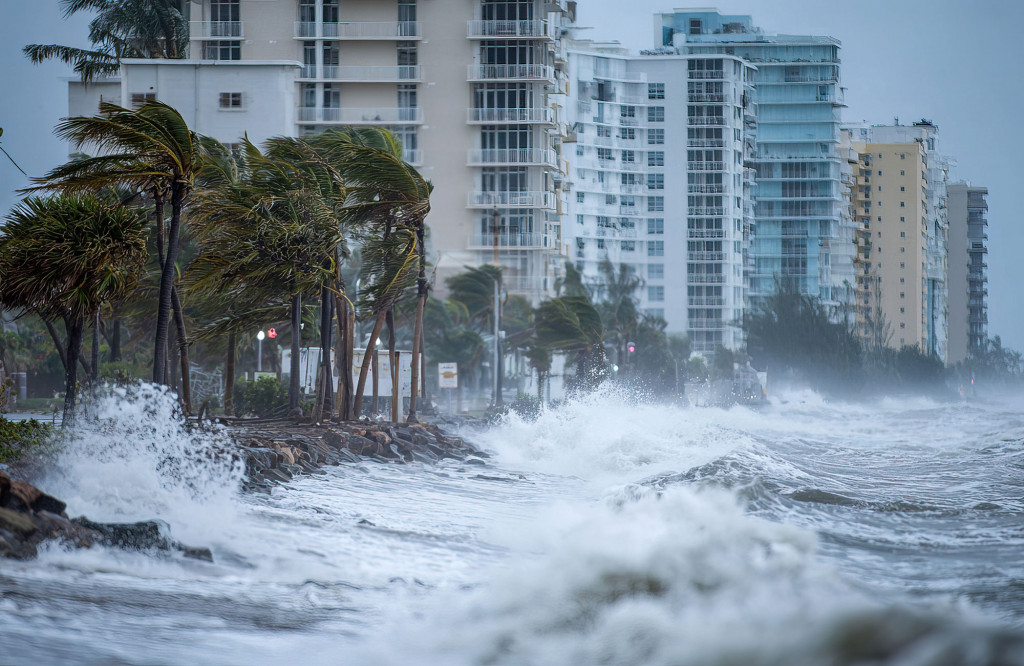
UF dives deep into predicting storm damage with computer models
December 16, 2025Though the 2025 hurricane season was relatively quiet for the United States, researchers are combining massive amounts of observational data with wildly complex computer models to predict the impact of future storms on coastal communities. The University of Florida’s Engineering School of Sustainable Infrastructure & Environment, or ESSIE, is part of a project that recently […]
Read more: UF dives deep into predicting storm damage with computer models »
UF researchers mine lightning data to protect cell towers
December 10, 2025University of Florida postdoctoral researcher Ziqin Ding, Ph.D., and his team are working on a project to protect cell towers and other tall objects from lightning strikes. Using a novel combination of antennas, sensors, and algorithms, Ding’s system is able to detect if a particular lightning strike has impacted a given structure or not.
Read more: UF researchers mine lightning data to protect cell towers »