
Category: Research & Innovation
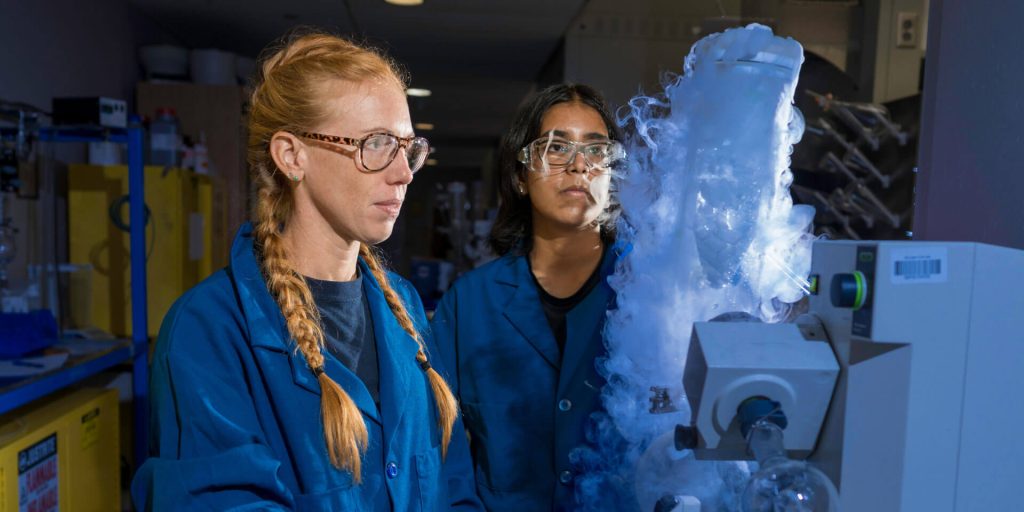
Wertheim Foundation Provides Lead Gift of $100 Million to UF Scripps
October 13, 2022The largest individual gift in UF history will name the Herbert Wertheim UF Scripps Institute for Biomedical Innovation & Technology and launch a $1 billion public-private partnership that will drive the future of biomedical research and innovation.
Read more »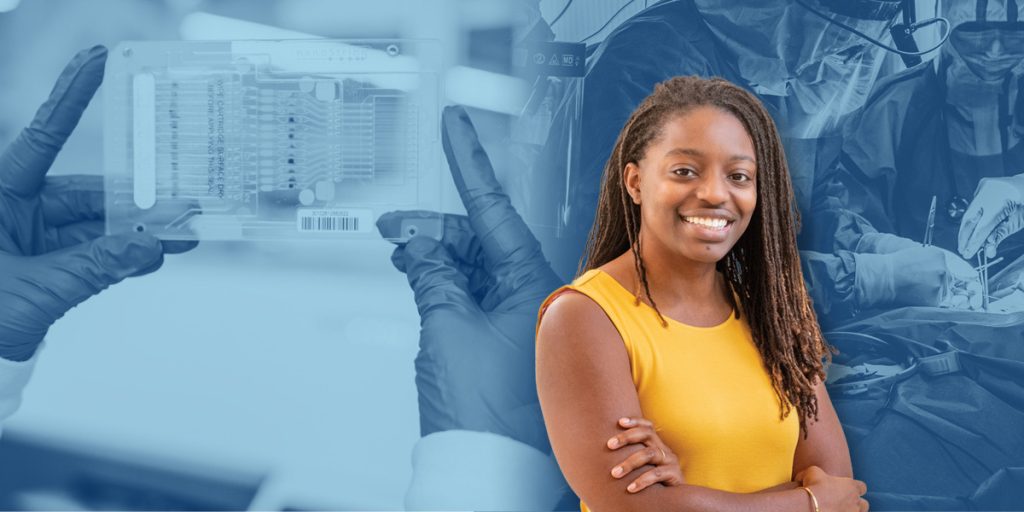
Erika Moore Receives $1.85 million from NIH to Investigate How Ancestry Affects Wound Healing
October 5, 2022Erika Moore, Ph.D., holder of the Rhines Rising Star Larry Hench Assistant Professor in the Department of Materials Science & Engineering, has received the prestigious National Institutes of Health Maximizing Investigators’ Research Award (MIRA) from the National Institute of General Medical Sciences. Dr. Moore and her team will use the five-year, $1.85 million award to address critical gaps in understanding the relationship between ancestry and cell responses in wound healing. In the long term, this research will lead to biomaterial models of health disparities for the improved identification of wound healing risks and outcomes.
Read more »
For Scientists, Hurricane Ian is Posing Threats—and Opportunities
October 1, 2022For scientists, Hurricane Ian, which roared onto Florida’s southwest coast on September 28, 2022, as a Category 4 storm with winds of 250 kilometers per hour, has been both a research opportunity and an ordeal.
Read more »
UF helps state launch AI curriculum in Florida public schools
September 23, 2022Florida is among the first states to adopt a K-12 artificial intelligence, or AI, education program designed to prepare its youth for the growing global demand for an AI-enabled workforce. The framework for the public school coursework was designed with help from UF faculty, including Christina Gardner-McCune, who modeled it after the Artificial Intelligence for K-12 Initiative, or AI4K12.
Read more »
Deepfake Audio Has a Tell – Researchers Use Fluid Dynamics to Spot Artificial Imposter Voices
September 22, 2022Patrick Traynor, Ph.D., Professor and John H. and Mary Lou Dasburg Preeminent Chair in Engineering in the Department of Computer and Information Science and Engineering (CISE), and Logan Blue, a Ph.D. student in CISE, write in The Conversation about why detecting audio deepfakes may be even more important than catching video deepfakes.
Read more »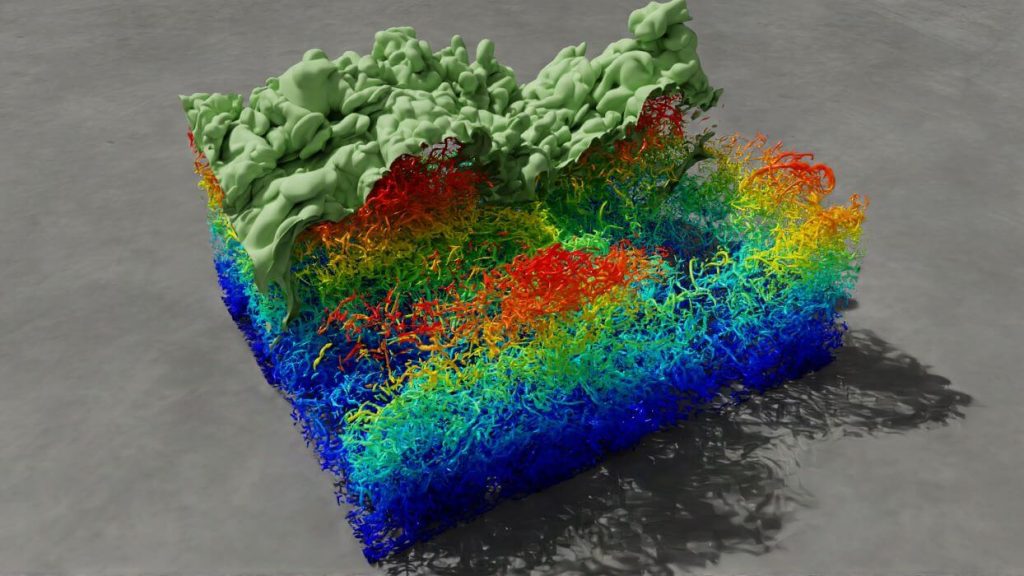
New HiPerGator Simulations “Solve Mother Nature” to Address Real-World Problems
September 22, 2022In one of the most intensive uses yet of the University of Florida’s HiPerGator supercomputer, UF engineers have faithfully reproduced the turbulence and complexity of hot air rising along a wall — a previously impossible simulation with applications in home fire safety and heating and cooling. Thanks to dedicated use of 90% of the HiPerGator’s AI cluster over several days, the research team led by UF engineering professor Sivaramakrishnan “Bala” Balachandar was able to track turbulent eddies of air twisting and swirling on the sub-millimeter level.
Read more »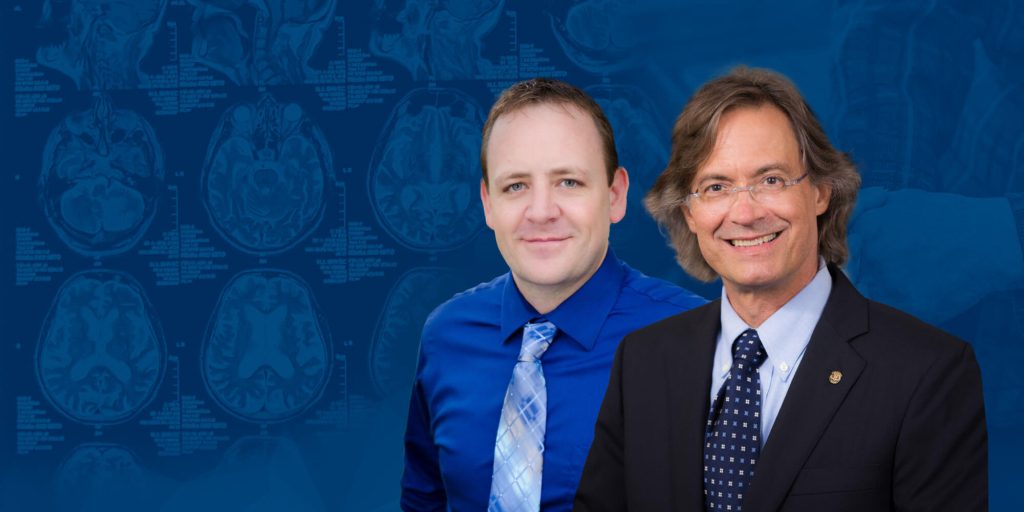
Engineering the Hi-Fi Brain
September 19, 2022Through a $4.5 million award from the National Institutes of Health (NIH), two researchers in the Herbert Wertheim College of Engineering are working to advance the therapeutic intervention known as “neuromodulation,” fine-tuning electronic stimulation inside the body by creating next-generation electrodes that will deliver the equivalent of high fidelity for the central nervous system.
Read more »
UF Researchers Enhance Defense Readiness Through the Language of Mathematics
September 7, 2022A multidisciplinary team of researchers led by engineering faculty including James Fairbanks, Ph.D., an assistant professor in CISE, hopes to build software that will relate data from one scientific problem to another, with the goal of providing valuable applications for defense readiness.
Read more »
UF is Perfecting the Next Generation of Pedestrian Safety Tech
September 2, 2022University of Florida Transportation Institute (UFTI), in collaboration with the Florida Department of Transportation and campus and city partners, will study a suite of emerging technologies that can save lives by providing timely warnings to drivers and pedestrians about one another — before an encounter becomes fatal.
Read more »
Jutla Receives $1M NASA Grant to Predict and Prevent Cholera
August 30, 2022Antarpreet Jutla, Ph.D., an environmental engineering sciences associate professor in the Engineering School of Sustainable Infrastructure & Environment, along with researchers and humanitarian advisors from other institutions, created a one-of-its-kind portal to predict and prevent cholera outbreaks. With a $1 million grant from NASA, UF will become one of the first institutions primed to understand the patterns of this disease’s emergence in several parts of the world with the use of prediction tools.
Read more »