

NanoDay is an annual national celebration of micro and nanoscale science, engineering, and technology that recognizes researchers, applauds innovators, and increases awareness in the field. Each year the Nanoscience Institute for Medical and Engineering Technology (NIMET) and the Nanoscale Research Facility (NRF) organizes UF NanoDay, which consists of stimulating research, educational, and networking events on or near NanoDay (Oct 9th: 10^-9). This year it will be on Wednesday, Oct 7th, 2026. We encourage everyone on campus that is involved in micro and nanoscale research and/or training to come and share information and learn from each other about their efforts, accomplishments, and discoveries. The topics presented at UF NanoDay typically include but are not limited to the following:
| Nano-Electronics | Nano-Materials | Nano-Biology | Nano-Fluidics |
| Nano-Mechanics | Nano-Particles | Nano-Medicine | Nano-Agriculture |
| Nano-Photonics | Nano-Chemistry | Nano-Dentistry | Nano-Physics |
Important Links: Register – Submit Poster Title – Student Talk – Image Contest
Events planned for UF NanoDay include:
Wednesday, Oct 7th, 2026
The NanoDay Research Symposium, which will be hosted by NIMET in the Grand Ballroom of the Reitz Union, will include the following activities:

- Keynote Presentations
- Student Presentations
- Poster Session and Awards
- Nanotech Industry Panel
- Image Contest
- Group Photo
Register for NanoDay:
To participate in the NanoDay events, we ask that everyone complete a free registration form by Sep 29. Doing so helps us to plan to have enough resources to make the event more successful.
Submit a Poster Title:
We encourage all UF students, postdocs, fellows, and faculty engaged in research at the nanoscale to contribute to the technical program. To participate in the NanoDay poster session please submit a poster using this form by Sep 29. Please size your poster to 40″ x 30″ since that is the size of our posterboards. We also provide an optional poster template (vertical and horizontal) for students to use. Posters can be printed very affordably at the Marston Library.
Apply for a Student Talk:
We also encourage any UF student or postdoc that would like to give a talk to apply for one of slots by filling out this application by Sep 25.
Image Contest:
If you have an amazing, mysterious, or funny image of something at the nanoscale or microscale (or is at least related to research at the nanoscale), please consider submitting it to our image contest! To submit an image, use this form and read the guidelines by Sep 30.
Scheduled of Events:
the most current schedule of events is show below (pdf).
| 09:00 – 09:10 | Welcome and Introductions: Prof. Jack Judy (NIMET Director) |  |
| 09:10 – 09:15 | HWCOE Leadership: Prof. Hugh Fan (ADR) |  |
| 09:15 – 09:30 | TBA | |
| 09:30 – 10:15 | Keynote Speaker: | |
| 09:30 – 10:15 | Prof. Volker Sorger Optoelectronics for the 2030’s: Functional Materials – Novel Devices – Robotics & AI Abstract: What do your phone’s touchscreen, your brain, and a data center in space have in common? Discover how atom-thin materials and chips that compute with light could transform cameras, make robots smarter, and help AI learn more like humans—with a glimpse into our work with NASA and SpaceX to explore data centers in orbit. In this talk, I will show how emerging materials, nanomanufacturing processes, and optoelectronic circuits enable the next AI and robotics wave. I will share latest results on novel 2-dimensional materials for better cameras and sensors and introduce transparent conductive oxides, a material each person touches every day 10 to 100 times and how we can build better AI Hyperscalers with such an optical material. Lastly, I will connect neuroscience, the human biological brain with emerging machine learning concepts of spiking neural networks and Hebbian-learning to answer the question: ‘how dies the human brain learn?’ and ‘How is that different from OpenAI/Anthropic’s approach today’. I will show some photonic-electronic chips that can learn like humans do and process unseen data and scenes. Finally, I will share our latest trusts towards exploring datacenters in earth’s orbit together with NASA and Space-X. Bio: Dr. Volker J. Sorger is the Rhines Endowed Professor for Semiconductor Photonics in the Department of Electrical and Computer Engineering at the University of Florida and the Deputy Director for Strategic Initiatives of the Florida Semiconductor Institute. Prior Dr. Sorger served as the Deputy Chief Digital Officer for the CHIPS Act Manufacturing USA Institute ‘SMART’. In these roles, Dr. Sorger coordinates microchip and semiconductor activities for the state of Florida, nationwide, and transatlantic partnerships building R&D and manufacturing ecosystems and private-public partnerships. Technical expertise includes optoelectronics, photonic-electronic integrated circuits, AI accelerators, advanced packaging, prototyping, digital twins and space technology. For his work, Dr. Sorger received multiple awards including the SPIE Maria Goeppert-Mayer Award, top 16 educators in the nation, the Presidential PECASE Award, the Emil Wulf Prize, and the National Academy of Sciences award of the year. Dr. Sorger was the Chief Editor-in-Chief for the journal of Nanophotonics and served on the boards of SPIE and Optica. He is a Fellow of IEEE, SPIE, IAAM, the Optical Society, and was a scholar of the German National Academic Foundation. He holds 30 U.S. patents and disclosures with licenses to corporations and founded deep-tech ventures. |  |
| 10:15 – 10:30 | Break | |
| 10:30 – 11:45 | Student Talks (15 min/each) | |
| 10:30 – 10:45 | A High-Bandwidth Piezoelectric MEMS Dynamic Pressure Sensor for >800°C In-Air Applications Alexander Reilly, Steven Vokoun, Dylan Cox, Venkateswarlu Gaddam, Philip Feng, Roozbeh Tabrizian, Mark Sheplak Mechanical and Aerospace Engineering |  |
| 10:45 – 11:00 | Experimental Demonstration of Nanoelectromechanical Oscillator Ising Machine for Solving Optimization Problems Timothy W. Caplice, Tahmid Kaisar, Ethan C. Stace, Steven W. Shaw, Cristian Cassella, and Philip X.-L. Feng Physics | 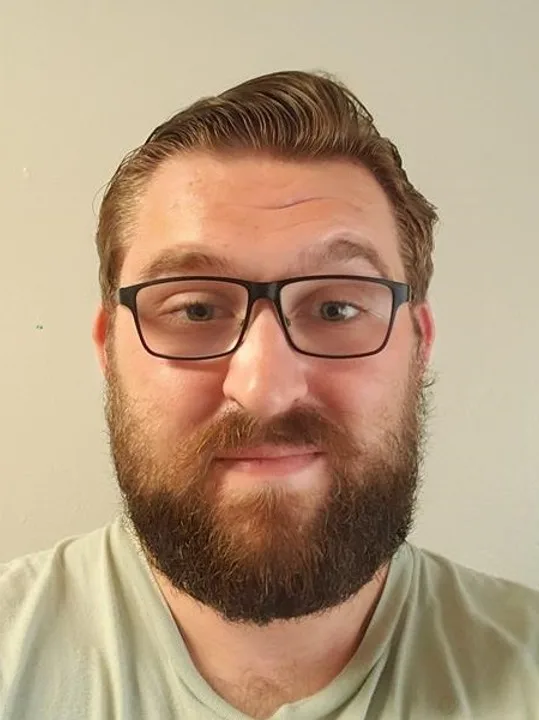 |
| 11:00 – 11:15 | Investigations of Magnetoelectric Nanofibers for Electromagnetic Interference Shielding Bror X. Ekdahl, Jennifer S. Andrew Materials Science and Engineering |  |
| 11:15 – 11:30 | Characterization of Boron-Doped Diamond Using Corona Non-Contact Capacitance Voltage (CnCV) Metrology Anshika Kushwaha, Ivan Shekerov, Bradley Wilson, Zachary W. Hargus, Fan Ren, Marshall Wilson, Travis J. Anderson Chemical Engineering |  |
| 11:30 – 11:45 | Skyrmion quantum diode prototype: bridging micromagnetic simulations and quantum models Haowen Yang, Gerald Bissell, Han Zhong, Peter Van Kirk, Tiger Cao, Pengcheng Lu, Yingying Wu Electrical and Computer Engineering |  |
| 11:45 – 12:00 | Group Photo | |
| 12:00 – 13:00 | Lunch and Networking | |
| 13:00 – 14:30 | Poster Session (List of Posters) | |
| 14:30 – 16:00 | Industry Panel | |
| Dr. Case Lorance (CEO and founder, NEXI Biotech) Dr. Lorance is the Founder of NEXI Biotech, a neuro techbio company developing brain circuits-on-a-chip. This platform creates data for modeling human brain function, predicting therapeutic efficacy before first-in-human trials, and reducing late-stage trial failures. As a research scientist, he developed the first humancell-basedmicrophysiological system (MPS) to produce efficacy data that would enable FDA Investigational New Drug (IND) approval without animal testing; which progressed to Phase III trials, contributed to Sanofi’s $11.6 billion acquisition of Bioverativ, and catalyzed the FDA Modernization Acts 2.0 and 3.0. Following which, Case advanced commercialization of brain-computer interface (BCI), and various MPS startup technologies. He also founded BIO on the Bay and Florida BioXchange to cultivate talent at the intersection of deep tech and life sciences in central Florida. |   | |
| Dr. Bahar Basim (Principal Process Integration Engineer, Skywater Technology) Dr. Basim is an accomplished industry leader and expert with extensive experience in semiconductor technology R&D, pathfinding, high-volume manufacturing, advanced packaging, and foundry applications. She currently serves as a Sr. Principal Process Integration Engineer at SkyWater Technology, driving advanced packaging and quantum technology enablement. A recognized global authority in Chemical Mechanical Planarization (CMP), her expertise focuses on integrated semiconductor development for logic, memory, and advanced packaging applications, with academic alignment on Å-scale manufacturing. Throughout her career, Dr. Basim has led critical process integration, yield improvement, and cost reduction projects for major microelectronics corporations. She has also had leadership roles at Intel and foundational engineering roles at Texas Instruments. Dr. Basim earned her Ph.D. in Materials Science and Engineering from the University of Florida. She has also launched a venture-backed startup based on her intellectual property. | 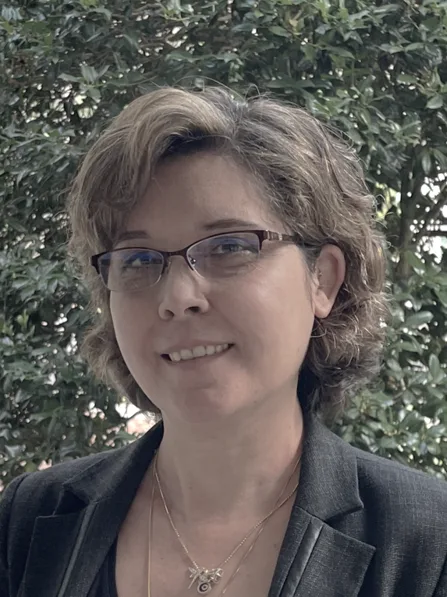  | |
| Dr. Will “Chip” Patterson (Vice President and Principal Engineer, IC2) Dr. Patterson leads electronic instrumentation development and supports the company’s technical, operational, and product-development activities. His work includes MEMS-based sensor development, analog electronic design, high-speed data acquisition, and sensor characterization. Dr. Patterson earned his B.S., M.S., and Ph.D. degrees in electrical engineering from the University of Florida, worked at Sandia National Labs as an instrumentation engineer, before joining IC2 and working his way from Senior Engineer to Vice President. He has lead research projects, developed products, and authored publications and conference papers in MEMS sensor technology, magnetic MEMS imaging instrumentation, aeroacoustic instrumentation, and wireless data acquisition. | 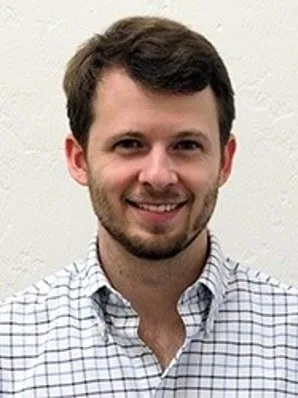   | |
| 16:00 – 16:15 | Break | |
| 16:15 – 17:15 | Student Talks (15 min/each) | |
| 16:15 – 16:30 | Differential Tissue Coupled Powering for Injectable Electroceuticals Han Wu, Asif Iftekhar Omi, Sultan Mahmud, Anyu Jiang, Mali Halac, Cameron Wallace, Erin Patrick, Shriya Srinivasan, Baibhab Chatterjee, Adam Khalifa Electrical and Computer Engineering |  |
| 16:30 – 16:45 | Exploring the Role of Nanocarrier Surface Charge on Lymphatic Accumulation and Systemic Biodistribution after Intradermal Injection Esteban G. Bermudez-Berrios, Taylor H. Shields, Daniela P. Valdes, Blanca Ostmark, Eric Daniel Imhoff, Aniela Nozka, Carlos M. Rinaldi-Ramos Biomedical Engineering |  |
| 16:45 – 17:00 | Chelating Lipids as Polymer-Free Stabilizers for Monoolein Nanoparticles: Comparing Ni–NTA and Gd–DTPA Interfaces Kattayani Sarkar, Diba Allameh Zadeh, Gail E. Fanucci Chemistry |  |
| 17:00 – 17:15 | Electrochemical Synthesis and Morphology Control of Cu(OH)2 Nanoneedle Arrays for CO2RR Electrocatalyst Design Nicholas Obeng, Luka Mellone, Kirk Ziegler Chemical Engineering |  |
| 17:15 – 17:30 | Awards and Closing Remarks |